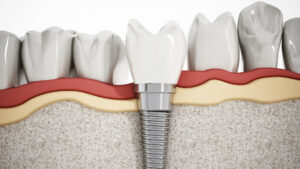
Osteopenia by itself is not usually a barrier to dental implants. The term describes bone density that is below normal but has not reached the osteoporosis threshold, and that density is measured at the hip and spine rather than at the jaw. What matters more is the density and volume of bone at the specific implant site, plus any bone medication you take. For Ventura patients, a 3D scan and a full medical history answer the question properly.
A bone density result that reads “osteopenia” often arrives years before anyone mentions dental implants. When a tooth then needs replacing, the two facts collide and the assumption is usually that the answer is no.
That assumption is generally wrong, but the reasoning behind the real answer is worth understanding. Implant candidacy has less to do with the diagnosis on the report and more to do with what is happening in one specific part of your jaw.
At Avra Dental, we take a full medical history and a 3D scan before giving any Ventura patient an answer on implant candidacy. Contact us today if you have been told your bone density rules implants out.
What Osteopenia Means for Your Jawbone
Osteopenia is a measurement, not a disease process in its own right. Understanding what it does and does not describe clears up most of the confusion.
Reduced Density That Has Not Reached the Osteoporosis Threshold
Osteopenia describes bone mineral density that sits below the normal range but above the cut-off used to define osteoporosis. It is a marker of increased fracture risk over time rather than a diagnosis of fragile bone everywhere in the body.
Many people carry that label for years without any change to daily life, and the result commonly turns up on a scan ordered for something else entirely.
The Scan Measures Your Hip and Spine, Not Your Jaw
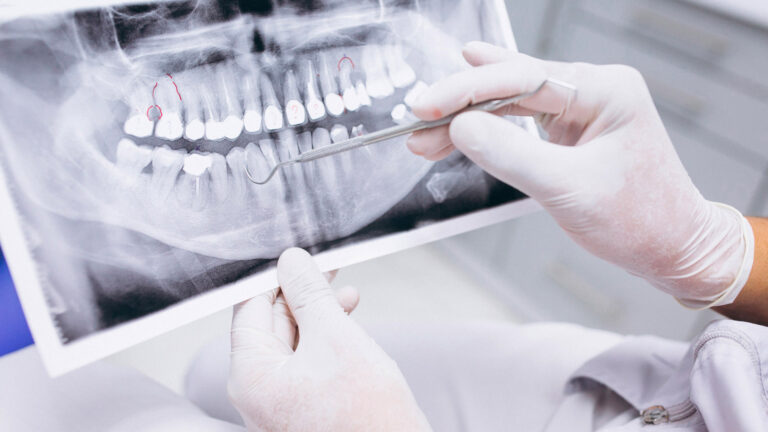 The standard bone density scan reports readings from the hip and lumbar spine, the sites the diagnostic thresholds were built around.
Your jaw is not part of that measurement. Jawbone density varies from person to person and from site to site within the same mouth, which is why a systemic score cannot answer a local question.
Why the Jaw Behaves Differently From Other Bone
Jawbone responds to the forces placed on it by teeth. Areas that recently carried a functioning tooth often retain good density, while a site where a tooth was lost years ago may have thinned regardless of the systemic score.
That is why two patients with identical density reports can have different implant options. The relevant bone is the bone at the site itself.
Why a Bone Density Score Does Not Decide Dental Implant Candidacy
Candidacy is assessed locally. A systemic label settles nothing on its own, and current professional guidance reflects that.
What the Professional Guidance Actually Says
The American Dental Association states that antiresorptive therapy does not appear to be a contraindication to dental implant placement. The American Association of Oral and Maxillofacial Surgeons is more reserved in its 2022 update, describing the risk tied to implant placement as unknown because strong data do not exist and the available data conflict, and asking that consent cover the low risk of jaw complications along with the possibility of early and late implant failure.
An international Osteonecrosis of the Jaw Taskforce consensus statement published in 2025 reviewed the outcome data and reported that current evidence does not suggest a link between antiresorptive therapy for osteoporosis and dental implant failure. Osteopenia sits below the treatment threshold those documents were written around, which is why it draws correspondingly less concern.
The Site-Specific Factors That Do Decide It
 What actually determines whether dental implants in Ventura are workable at a given site comes down to measurable local conditions:
- Bone height above the sinus in the upper jaw and above the nerve canal in the lower jaw.
- Bone width across the ridge where the implant would sit.
- Bone quality as it appears on the 3D scan, which varies by region of the mouth.
- Gum health, because active periodontal infection is a bigger obstacle than density.
- Smoking, which affects healing more than most systemic conditions do.
When Grafting Changes the Answer
A site that lacks height or width today is not necessarily a permanent no. Bone grafting rebuilds ridge volume, and a sinus lift creates height in the upper back jaw where the sinus floor has dropped.
Both procedures add time to the plan rather than ruling it out. We perform both in our own office, so the sequence stays under one roof.
The Medications That Matter More Than the Diagnosis
For most patients, the medication history is the more important half of the conversation. This is general information, and any decision about a prescription belongs with the doctor who prescribed it.
Antiresorptive Medications and What They Do
Bisphosphonates and denosumab slow the natural turnover of bone, which is how they reduce fracture risk. That same slowing is why they get discussed before oral surgery, since bone healing after oral surgery relies on that turnover.
These medications are prescribed for osteoporosis far more often than for osteopenia, and many people with osteopenia are not taking one at all.
Medication-Related Osteonecrosis of the Jaw in Context
 Medication-related osteonecrosis of the jaw is the specific complication behind the caution. The American Association of Oral and Maxillofacial Surgeons estimates the risk in osteoporosis patients on oral bisphosphonates at roughly 0.02 to 0.05 percent, about two to five cases per 10,000, which overlaps the rate recorded in untreated comparison groups.
Higher doses given intravenously for cancer treatment sit in a different risk category entirely. Conflating the two makes routine dental care sound far more dangerous than the evidence supports.
Why Nobody Should Stop a Prescription on Their Own
The 2025 Osteonecrosis of the Jaw Taskforce suggests antiresorptive therapy does not need to be stopped before implant placement in osteoporosis patients, though it grades that as a weak recommendation on very low-quality evidence. Stopping a bone medication carries its own fracture risk, and that trade-off is a medical decision rather than a dental one.
What we do need is an accurate list of what you take, at what dose, and for how long. That list, along with the tooth extraction if a failing tooth is still present, shapes how the treatment is sequenced.
How Implant Candidacy Is Assessed in Ventura
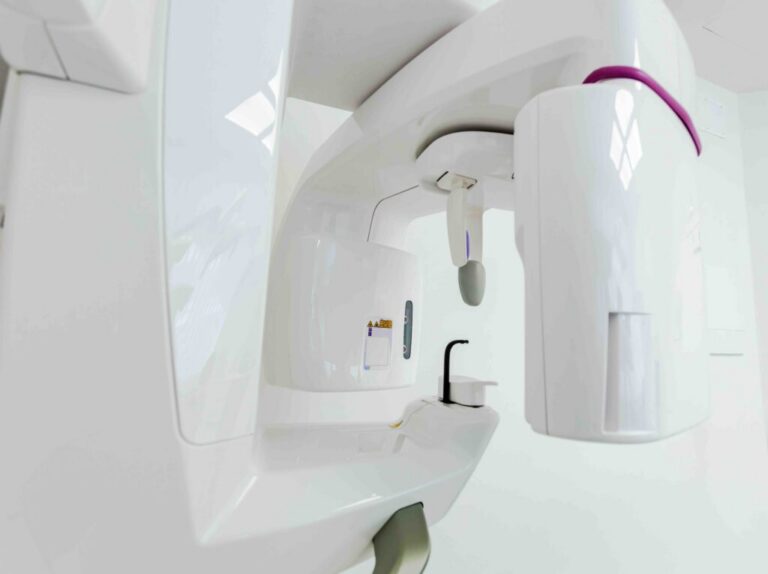
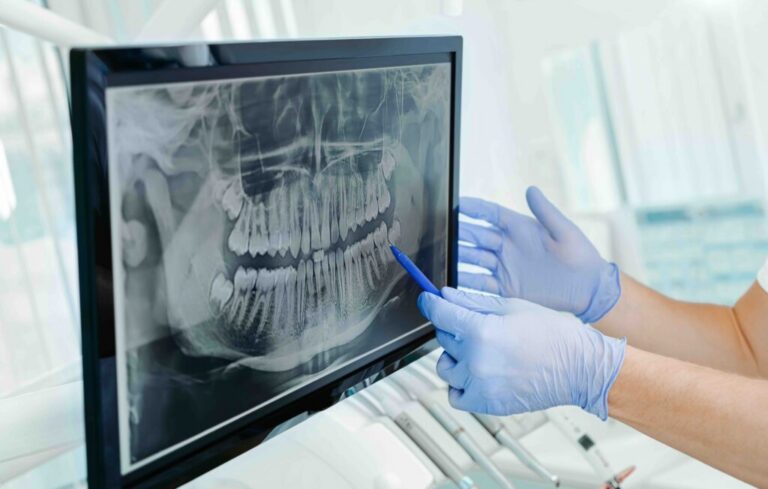
Implant candidacy assessment starts with a 3D cone beam scan, which shows bone height, width, and density at the exact site rather than an average. The process is the same for every patient, with more weight on the medical history when a bone condition is on the chart.
| What We Check | Why It Matters | What It Can Change |
|---|---|---|
| 3D scan of the implant site | Shows actual bone height, width, and quality where the implant would go | Implant size, angle, or the need for grafting |
| Full medication list | Antiresorptive drugs, steroids, and dose history affect surgical planning | Timing, sequencing, and how closely healing is monitored |
| Periodontal charting | Active gum infection is a larger obstacle to implant success than density | Whether gum treatment comes first |
| Bite and opposing teeth | Load on the implant determines long-term stability | Restoration design and whether a night guard is advised |
Those four inputs usually settle the question in a single appointment. Our implant consultation includes the 3D scan at no charge, listed as a $300 value, so you get a real answer before committing.
If the site works, planning moves to the implant and the dental crown that sits on top. If it is not workable yet, the conversation shifts to what would need to change first.
What This Means for Ventura Patients With Osteopenia
A bone density label is a reason to plan carefully, not a reason to assume implants are off the table. The people who lose options are usually the ones who never asked, and who let a gap sit long enough for the ridge to thin further.
At Avra Dental, we can tell you what your own scan shows rather than what a general rule suggests. Call us today to book an implant evaluation at our Victoria Avenue office.
Medical Disclaimer: This article is for general informational purposes only and is not a substitute for professional dental or medical advice, diagnosis, or treatment. Do not start, stop, pause, or change any prescribed medication based on this article. Discuss any change with the doctor who prescribed it, and have implant candidacy assessed in person by a licensed dentist.
Frequently Asked Questions
Does osteopenia disqualify you from dental implants?
Osteopenia on its own does not usually disqualify someone from dental implants. It describes below-normal bone density measured at the hip and spine, not at the jaw, and candidacy is decided by the bone volume and quality at the actual implant site along with your medical history.
Can you get dental implants if you take bisphosphonates?
The American Dental Association states that antiresorptive therapy does not appear to be a contraindication to dental implant placement, while oral and maxillofacial surgery guidance is more reserved and calls the implant-specific risk unknown. Consent covers the low risk of jaw complications and the possibility of implant failure, and your dentist will want your full dose and duration history first.
What is the risk of osteonecrosis of the jaw from dental implants?
The American Association of Oral and Maxillofacial Surgeons estimates medication-related osteonecrosis of the jaw at roughly 0.02 to 0.05 percent in osteoporosis patients on oral bisphosphonates, about two to five cases per 10,000, which overlaps the rate in untreated comparison groups. Higher-dose intravenous therapy used in cancer care sits in a much higher risk category.
Should I stop my osteoporosis medication before implant surgery?
Do not stop or pause any prescription on your own. The 2025 Osteonecrosis of the Jaw Taskforce suggests antiresorptive therapy does not need to be stopped before implant placement in osteoporosis patients, though it calls that a weak recommendation on very low-quality evidence, and any change is a decision for the physician who prescribed it.
How do dentists check if you have enough bone for an implant?
A 3D cone beam scan measures bone height, width, and quality at the specific site, which a standard X-ray cannot do accurately. That scan shows how close the sinus or nerve canal sits and whether the ridge can hold an implant of a suitable size.
Can bone grafting help if I do not have enough jawbone?
Bone grafting rebuilds ridge width or height, and a sinus lift creates space in the upper back jaw where the sinus floor has dropped. Both add healing time to the plan rather than ruling implants out, and we perform both procedures in our own office.
Do dental implants fail more often in people with low bone density?
A 2025 Osteonecrosis of the Jaw Taskforce systematic review and consensus statement reported that current evidence does not suggest a link between antiresorptive therapy in osteoporosis patients and dental implant failure, though it graded that evidence as low quality. Active gum disease, smoking, and heavy bite forces affect implant outcomes more clearly than a systemic density score.
What are the alternatives if implants are not an option?
If a site cannot support an implant, options include a fixed bridge supported by adjacent teeth, a removable partial denture, or grafting first and revisiting implants later. The right choice depends on how many teeth are missing, the condition of neighboring teeth, and your own preferences.
