For Ventura patients, a dental crown is generally worth the money when a tooth has lost enough structure that a filling would keep failing. Published systematic reviews report about 97 percent survival for zirconia single crowns at five years. That makes a well-made crown a multi-year restoration. Value depends on the material, which tooth it covers, and your bite habits. Crowns are poor value on teeth with a weak long-term outlook.
Last Updated: October 22, 2026
Table of Contents
Crowns sit in an awkward spot for most patients because they cost noticeably more than a filling. They are not visible enough to feel like a cosmetic upgrade, and the benefit is a tooth that simply keeps working.
That makes the value question a fair one to ask before saying yes. The honest answer depends less on the crown itself than on the tooth underneath it.
At Avra Dental, we explain what the examination shows and what the treatment will cost before recommending one so the reasoning is visible. Contact us today if you want a second look at a crown that has been suggested to you.
What Does a Dental Crown Actually Do?
A crown is a shell that covers the whole visible portion of a tooth and takes over its shape, its bite contacts, and its strength. That is a different job from a filling, which sits inside a cavity and relies on the surrounding tooth to hold everything together.
The distinction matters once a tooth has lost a large share of its structure. A big filling in a molar acts like a wedge under chewing load, and the remaining walls can flex until one of them fractures.
A crown wraps those walls instead of pushing them apart. That is why it is the standard recommendation after a root canal on a back tooth or after a cusp has already broken off.
Materials matter here too. Dental crowns in Ventura at our office are made from monolithic zirconia on back teeth, where chewing force is highest. On front teeth, we use layered E.max, where light needs to pass through the material to look natural.
How Long Do Dental Crowns Last?
Published clinical studies put modern crowns in the range of many years of service, with survival differing by material and by tooth position. This is where the value case is made or lost, and individual results still vary with the bite and home care.
Zirconia Survival in Published Studies
Zirconia is often chosen for back teeth for its strength, and it has a long published track record. Pooled systematic-review data puts zirconia single-crown survival at about 97 percent at five years. Long-term cohort data has followed monolithic zirconia crowns to roughly 86 percent survival at ten years.
Layered versions perform differently. In the same long-term comparison, porcelain-fused zirconia crowns sat closer to 71 percent at ten years. Reviews also find layered porcelain surfaces chip more often than solid zirconia.
The Porcelain-Fused-to-Metal Track Record
Porcelain-fused-to-metal has been the workhorse crown for decades, and its numbers reflect that history. One university dental clinic cohort reported about 84 percent cumulative survival for its porcelain-fused-to-metal and full-metal crowns at five years.
Those figures still describe a restoration measured in years. They also explain why material choice is worth discussing.
Where the Crown Sits in the Mouth
Position may play a part in longevity, though the evidence is mixed. One university clinic cohort found the highest survival on premolars and the lowest on molars. A long-term zirconia study linked molar crowns to more complications, though larger studies do not all agree.
Front teeth face a different challenge. They carry the appearance burden, which is why material selection shifts toward E.max there.
Habits That Shorten Crown Life
Nightly grinding, known clinically as sleep bruxism, is a recognized risk factor for crown complications and failure. Layered porcelain is the surface most prone to chipping. Chewing ice, using teeth to open packaging, and a heavy bite in one area all concentrate stress on the same margin.
Gum health matters as much as the crown itself. A crown margin sitting in inflamed, bleeding tissue is more likely to develop decay underneath than the same crown in a healthy mouth. Our list of early warning signs of gum disease shows what to watch for.
What Drives the Cost of a Dental Crown in Ventura?
Crown fees vary between Ventura practices, and no two mouths present the same amount of work. What moves the number is fairly consistent:
- Material: zirconia, layered E.max, and porcelain-fused-to-metal are priced differently.
- Lab work: custom shading and layering for a front tooth takes more chair time and more lab time.
- Preliminary treatment: a tooth needing a root canal, a post, or a build-up before the crown adds those steps.
- Tooth position: front teeth generally require more shade matching than a molar.
- Insurance design: many plans cover a share of crowns after a waiting period, with an annual maximum that caps the benefit.
We do not publish a single crown price because the honest figure depends on which of those items apply to your tooth. What we do commit to is explaining the fee before treatment begins. Our explainer on how PPO dental insurance works covers waiting periods and annual maximums.
Our look at whether dental insurance saves you money runs the numbers. Note that our crowns are made in a dental laboratory from a digital scan and fitted at a second visit. That means we do not offer a one-appointment crown.
When a Dental Crown Is Worth the Money and When It Is Not
Value is a comparison. The useful question is what the money buys relative to the alternatives for that specific tooth.
Strong Value: A Cracked or Heavily Restored Back Tooth
A molar with a large old filling, a visible crack line, or a missing cusp is the clearest case for a crown. The alternative is usually a bigger filling that stresses the tooth further, followed by a fracture that can take the tooth below the gumline.
Catching that tooth before it splits is what makes the spend worthwhile. A crown placed after a vertical root fracture is often too late to help. Our guide to the signs of a dental emergency explains when a cracked tooth needs care the same day.
Situational Value: A Front Tooth With Cosmetic Concerns
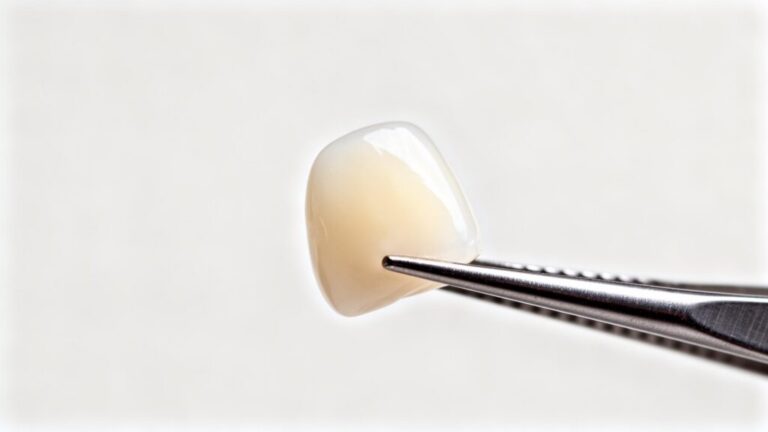 For a discolored or worn front tooth, a crown is one option among several. Sometimes the tooth is structurally sound and the issue is shape, shade, or small chips. In that case, porcelain veneers cover the front surface while removing far less tooth structure.
The trade-off is durability against conservation. Crowns are the stronger choice when the tooth has already lost significant structure, while veneers keep more of the natural tooth when it has not.
Poor Value: A Tooth With a Weak Long-Term Outlook
Some teeth have advanced bone loss, a vertical root fracture, or recurring infection. A crown on one of those teeth is money spent on a foundation that is already failing.
In those cases, the more useful conversation is about extraction followed by a dental implant or a bridge. If low bone density is the worry, our guide to dental implants with osteopenia covers what actually decides candidacy.
That answer is not always what patients want to hear. Spending on a crown twice and still losing the tooth is the outcome worth avoiding. That is why we assess the foundation before planning the restoration.
Watch or Listen to This Ventura Dental Crown Guide
Prefer to watch or listen? We cover the same crown questions in a short video and an audio version, so you can check them from your phone.
Where Ventura Patients Should Start
A crown’s value depends on the tooth, so start with a proper look at what is left of it and the bone around it. A scan, an X-ray, and a bite check answer the question far better than a general cost comparison can.
At Avra Dental, we go through those findings with you and lay out the alternatives, including doing nothing for now where that is reasonable. Call (805) 941-1001 to have the tooth evaluated at our Victoria Avenue office in Ventura.
Medical Disclaimer: This article is for general informational purposes only and is not a substitute for professional dental advice, diagnosis, or treatment. Survival figures cited here come from published clinical studies of crowns in general, not from any single practice. Individual results vary with your oral health, bite, and home care.
Frequently Asked Questions
Is a crown better than a large filling?
For a tooth with much of its natural structure gone, a crown is generally the more protective option. It wraps the remaining walls instead of wedging them apart. For smaller cavities with plenty of healthy tooth left, a filling is usually the more conservative choice.
Which crown material lasts the longest?
Monolithic zirconia and lithium disilicate (the E.max family) both post five-year survival near or above 97 percent in published reviews. The strength of zirconia makes it a common pick for molars. Layered materials such as E.max are often chosen for front teeth because they look more natural. The trade-off is a higher chance of surface chipping.
Does dental insurance cover crowns?
Many PPO plans cover a share of the crown fee after a waiting period. That share is subject to an annual maximum that can limit how much is paid in one year. Coverage varies by plan, so we handle the paperwork for you and explain your expected cost before treatment begins.
Can a crown fail or fall off?
Yes. Crowns can debond, chip, or develop decay at the margin where the crown meets the tooth, particularly if grinding or gum inflammation is present. Most of these situations are repairable if you stop chewing on that side and have it looked at promptly.
Do I need a crown after a root canal?
Back teeth are usually crowned after a root canal because the access opening and the loss of internal structure leave the tooth prone to fracture. Front teeth are sometimes restored with a filling instead, depending on how much natural structure remains.
