

The 4 8 10 rule for veneers is cosmetic dentistry shorthand for three common plans. Four veneers cover the central and lateral incisors. Eight cover the upper teeth shown in a moderate smile, and ten reach back to the premolars for a wide smile. The rule is a planning habit, and practices apply it in different ways. For Ventura patients, the right number comes from an assessment of your own smile.
Last Updated: November 4, 2026
Search this question and many pages treat the 4 8 10 rule as a fixed clinical standard. It is a planning shorthand, and its details even vary from one practice to the next.
That does not make it useless. Knowing what each number stands for makes the consultation easier to follow and helps you ask better questions.
At Avra Dental, we create a digital mock-up so Ventura patients can preview the proposed result before any preparation begins. That preview turns a rule of thumb into a plan you can actually look at.
What the 4 8 10 Rule Actually Refers To
The 4 8 10 rule sorts veneer treatment into three tiers by how much of the upper smile each one covers. Cosmetic practices use it as a starting point for planning, but nobody is bound by it, and two practices may word the same tier differently.
The three tiers usually break down like this:
- Four veneers: the two central and two lateral incisors, for small chips or a narrow shade problem.
- Eight veneers: the upper teeth most people show in a moderate, everyday smile.
- Ten veneers: the full upper smile line, extending as far as the premolars in a broad smile.
When we plan porcelain veneers in Ventura, the count comes from an exam of your bite, enamel thickness, and gum health. It never comes from a default number.
What Really Decides How Many Veneers You Need
The number on your plan follows from four practical factors, and none of them is a fixed rule. Each factor can move the count up or down on its own, so we review all four before suggesting any number for your smile.
Your Smile Line Decides Where the Eye Stops
The most important input is how many teeth show when you talk, smile normally, and smile broadly. Some smiles show only the four upper front teeth, while a broad smile can show ten or more.
Treating teeth nobody ever sees adds cost without a visible benefit. Leaving an untreated tooth inside the visible zone causes the opposite problem, because it can stand out next to new porcelain.
That is why we watch your smile in motion during the exam. A count that fits a still photo may miss the teeth you show when you laugh.
Shade Match Explains Why Stopping Short Can Show
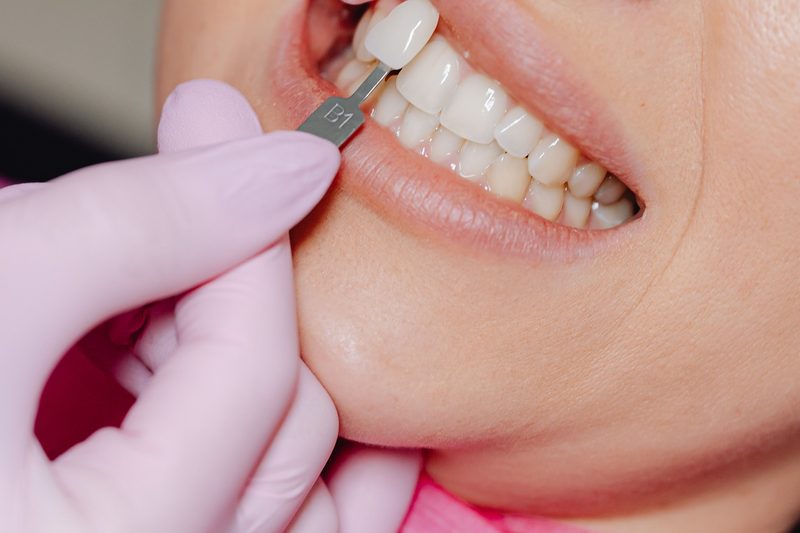 Veneers are made in a chosen shade, and the natural teeth beside them stay as they are. If the new veneers are much brighter, a visible seam can appear where porcelain meets natural enamel.
That seam is most likely at the edge of the smile, where treated and untreated teeth meet. It is one reason many plans extend a little further than the bare minimum.
Whitening the untreated teeth first can narrow that gap. The veneers can then be made to match the brighter shade, which may reduce how many you need.
Tooth Condition Determines What Can Be Left Alone
A tooth that is already well shaped, well placed, and a good shade may not need a veneer. A tooth with a large old filling or a deep crack may need more coverage than a veneer can give.
We assess every tooth in the visible zone on its own. That step keeps the plan from being set by a number alone.
Gum health is part of the same check, because healthy gums frame the finished result. If the gums need care first, our guide to what a dentist does for severe gum disease explains what that treatment can involve.
Your Bite and Grinding Habits Limit the Plan
Veneers are thin porcelain bonded to enamel, and heavy grinding puts them under real stress. A history of clenching can change both the material and the protection planned around it.
For patients with severe grinding, zirconia veneers may be the better fit because they resist fracture. We also make a custom night guard for patients who grind, to protect the new veneers.
Regular checkups help catch wear early on any restoration. Our guide to preventive dental care covers the routine that supports your teeth between visits.
Comparing the 4, 8, and 10 Veneer Plans
Seeing the three tiers side by side makes the trade-offs much easier to weigh before your visit. Cost rises with the count of teeth, and most Ventura County patients invest between $1,200 and $2,500 per tooth, depending on complexity.
Prices can change, so we still suggest calling us to confirm the price for your visit.
| Number of Veneers | What It Typically Covers | Who It Tends to Suit |
|---|---|---|
| 4 veneers | The central and lateral incisors | Small chips, a narrow shade issue, or one or two teeth out of shape |
| 8 veneers | The upper teeth visible in a moderate smile | People wanting an even shade and shape across the everyday smile |
| 10 veneers | The full upper smile line, back to the premolars | Wider smiles, or cases where the back visible teeth are noticeably darker |
| Lower teeth (added to any tier) | Added only when the lower arch shows clearly in speech or a broad smile | People whose lower teeth are visible enough to break the match |
The total for any plan depends on the count, the material, and any treatment needed first. We explain the pricing at your consultation, and we offer financing through CareCredit. Pricing questions can also go through our Ventura dental office contact page before your visit.
Dental insurance typically does not cover cosmetic procedures. Our guide to how PPO dental insurance actually works explains what a plan usually pays for.
Where the 4 8 10 Rule Breaks Down
The shorthand is useful until it starts making the decision for you, and three situations show where that happens. If a proposed plan ever feels larger than your smile needs, our patient guide to honest dental care lists fair questions to ask.
When the Real Problem Is Shade, Not Shape
If your teeth are well aligned and well shaped and the only concern is color, veneers may be more treatment than you need. Professional teeth whitening works on shade without removing any tooth structure.
Whitening also usually costs less and takes less time than porcelain. That makes whitening worth ruling in or out before you commit to veneers.
When a Tooth Needs More Than a Veneer
A veneer covers only the front surface of a tooth and relies on healthy enamel to bond. A tooth with a large filling, a crack, or major structure loss often needs a dental crown instead.
A smile plan can combine several veneers with one crown. Our post on whether dental crowns are worth the money covers when a crown is the stronger choice.
When Alignment Is the Underlying Issue
Veneers can mask mild crowding or small gaps, but they do not move teeth. Using porcelain to hide major crowding can mean removing more tooth structure than the case needs.
Where alignment is the root issue, straightening the teeth first may lead to fewer veneers afterward. That path takes longer and is often the more conservative choice.
Getting a Real Veneer Count for Your Smile in Ventura
The 4 8 10 shorthand is a fine way to start the conversation and a poor way to end it. Your smile line, tooth condition, and bite decide the number, and a digital mock-up lets you see the result first.
At Avra Dental, we review the plan with you first and typically remove only 0.3 to 0.5 millimeters of enamel. Book your veneer consultation at (805) 941-1001 to see a mock-up of your own smile at our Victoria Avenue office.
Medical Disclaimer: This article is general information about veneer planning. It is not a diagnosis and does not replace an in-person exam.
Cosmetic results can vary with your oral health, tooth position, and bite, so ask your dentist whether this applies to you. If you have a dental injury with heavy bleeding or trouble breathing, call 911.
Frequently Asked Questions
Is the 4 8 10 rule an official dental standard?
No. It is a planning shorthand that many cosmetic practices use, and the details differ from one practice to another. It helps frame the three common tiers, but your final count should come from an exam of your own smile, bite, and teeth.
Can you get just two veneers?
Yes, two veneers can work when only one or two teeth are chipped or misshapen and your natural shade is already even. The main risk is a shade difference between the two new veneers and the untreated teeth beside them, so careful shade matching matters.
Do veneers go on the bottom teeth too?
They can, but lower veneers are usually added only when the lower teeth show clearly as you talk or laugh. Many plans treat the upper teeth alone, because the lower teeth are less visible for most people. Your exam answers this question for your smile.
Should I whiten my teeth before getting veneers?
If you plan to keep some natural teeth in the visible zone, whitening usually comes first. The veneer shade can then be matched to your brightened teeth. Porcelain is made to hold its shade, so whitening gel will not lighten your veneers after they are placed.
